The Power of Encouragement

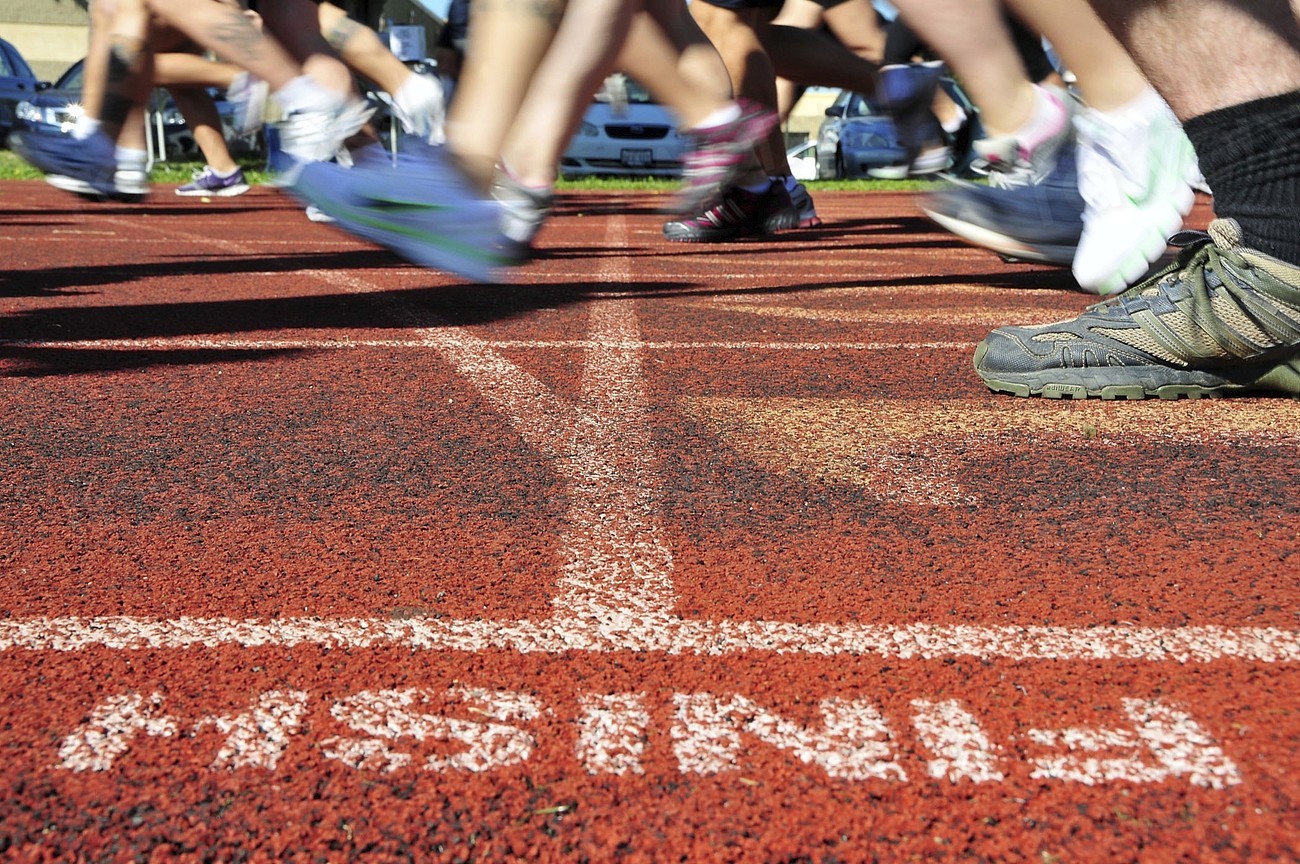
Marathon finish line. Free public domain CC0 photo. More: View public domain image source here

I find myself a bit down, caught up in a few weeks of losing a few people close to me.  For anyone my age, you will understand when I say I have been listening to a lot of Air Supply, need I say more?  Most recently I said goodbye to a dear friend that I have said for years “ran marathons, like for fun that I do not understand”, but he did, and he ran 105 in his lifetime. Ken did lots of other things but running was his passion and he could be found each day in the early morning taking in the dawn’s early light in his running gear.  At his funeral a running mate told a story of when he was trying to qualify for the Boston marathon, in which Ken had run a few times.  They both entered a local marathon to get the qualifying time. Ken finished with a good time and instead of resting he ran back a few kilometres and ran beside the friend trying so hard to qualify, encouraging him, supporting him, crossing the finish again with him and they both went to Boston.  I have to imagine that I would want to rest.  I so admire this idea that when his race was done, he just turned himself around and added a few more kilometres to make sure a friend crossed the finish.  I know that the tiny part of the world that Ken occupied will miss him terribly, his dry sense of humour and completely incongruous general grumpiness and love for all things Christmas. And now even in his early passing from aggressive cancer, I can be inspired to not only run my race to the finish, but to run beside those I want to support, may I never be “all out of love” and keep the pace he set.  

Turning a Corner

Photo by Pixabay on Pexels.com

This past weekend I was at a retreat, and in case you have never been the hallmarks are time away, good food and strange team building activities.  This retreat did not disappoint with lovely lakeside views all over.  The activity was simple as a group we were blind folded and placed all around a rope that was tied in a circle, we had to pick it up and then form a perfect square.  Sounds easy enough, but it wasn’t.  For my role I followed the leaders voice, I was told I was a corner in the structure, and I took it very seriously feeling with my two hands for the angle and directing people on each side of me to shuffle one way or the other by calling out what I felt my hands were an angle.  I was a serious corner maker. Then suddenly the group realized that we had only assigned three corners and that in fact with the number of people around the rope, I was no longer the right person for the corner job. Now I was just along the side, no real purpose but to ensure the rope was tight and straight. I felt the loss of my little activity role acutely.  And of course, got teased mercilessly for my disappointment.  I just got caught up in the experience and in making my corner 90 degrees and as perfect as a I could and then suddenly it was not my job, I had no input, I could not help, all I could do was hold my rope. Like lots of retreat team builders it seemed like a simple activity, but it offers deep insights.  I wanted to be making a difference in a corner.  I wanted to have a clear task.  I wanted to co-design and be counted on.  What a great reflection about the roles we have in our work, play and life.  There are some things that I like to just be part of, just hold the rope, just sit back and absorb.  Other roles I have I like to make a difference and have a voice and be a true participant.  Think about your roles and the roles of people around you, are they meeting your needs, are they filling your tank, are you engaged.  In all kinds of ways we need to seek out the opportunities that we find engaging, pick where your corner is and hold on. 

Going the Extra Mile

Photo by cottonbro studio on Pexels.com

I had the pleasure of attending someone’s 70th birthday party last week. It was held at a cozy café in downtown Haliburton and lots of friends were there. This café has a fantastic ramp to its main store, but late in the planning it was realized that the after-hours party was going to take place in a separate room with a different entrance. That entrance had a three-inch step to enter. Panic ensued as the party had many on the guest list that needed a ramp to enter. The team thought about moving the event, changing the time, and started scrambling to solve the problem. The owner of the establishment weighed in and told the team not to worry- “we will just build you a ramp”. This could work as the step was a small one and within a few hours a wooden ramp was installed. I love how things can bubble up when a group identifies a problem and then works together to seek out a solution. And countless times I have gone into a planning discussion feeling a little hopeless and lost in trying to think of a solution and the people I join begin to talk and soon options start to form. Equally sometimes there are distances between our opinion and the opinions of others as we work to plan, or problem solve. From time to time, we too must take a step back from our scramble and reassess the gap and sometimes we too can “just build you a ramp”. Problems do need to be talked about to shake us out of the echo chamber of our brains, if we listen and use a ramp to bridge the divide, we can usually start to hear a solution or the start of one and then we all reach the party together.

A Small Town Legacy

Photo by Natalie Bond on Pexels.com

This week we said goodbye to Gerald.  A man that lived in foster care and then institutions from the age of 2.  He moved to Haliburton to live with Community Living in 1986.  He was a man about town, he loved the police force, fire service, any work crew activity and a special affinity for riding the back of the garbage truck.  Community members invited him to take part in things and more than once when he lived independently and was missing he was riding along with the police, so easy to find once the agency contacted them. At his celebration there were so many stories describing his life connected to the fabric of  the community.  In one story he was attending to a tourist family that had a flat tire, with his badges and pens and official looking hat they were not sure what role he had, but had decided that he had an official capacity in the village.  When a community member stopped, they explained that Gerald was in fact just a villager with an interest, the family member asked about his pager.  The answer was “oh that doesn’t work”  at which time it went off and Gerald quickly moved on.  Minutes later being seen by the party on the side of the road riding along in the fire truck.  Gerald was connected and was able to do what he loved because people in Haliburton took the time to get to know what he loved and accepted his gifts.  How many of us are carrying pagers?  Carrying connections to different roles, carrying guilts and troubles, carrying obligations.  Do our pagers work?  Work for us?  Are these connections and roles a place to use our gifts, are our quirky talents and interests being valued, are we missed when we are not answering the call.  The legacy of Gerald’s Haliburton is that he added almost nothing in labour or problem solving, he was valued for his presence, his smile and what having him ride along added just in his presence.  Check your pager, check your to do list, who and what on there just makes you smile and just needs you along to make everyone more engaged and smiling.  Sure we all have a long bunch of numbers competing for our attention, but lets check in to make sure we have a few “ride alongs” in there where we can just be, just share, just smile, and where the to do list type people have trouble finding us.  These are the true connections, the true Gerald moments.

A Positive Spin on Change

Photo by Ingo Joseph on Pexels.com

I went to a book club meeting this week, in this club we all take turns hosting, so found myself in someone’s comfortable living room with friends learning more about the author of the month.  We offer a virtual option for the meetings, an advantage that the pandemic created in that we all know how to use it now and can meet from Florida colleges or with the sniffles. In order to get the presenter on camera better the operator of the virtual platform suggested moving a table closer, this was one of the formidable, plank coffee tables that just looked like 400 pounds of four hefty square wooden legs.  Three of us jumped up to help try to move the heavy load. However, it was an optical illusion, some genius had installed castors well out of view underneath and the illusion was that the solid foundational pillars actually hovered a few millimeters off the floor.  A toddler could move this table it rolled with perfect ease. Another reminder that often things seem completely solid, un-moveable, too heavy, too hard, but in the trying and the first gentle nudge we can sometimes find that we were not seeing the challenge for what it was.  We were looking at it and quickly making a judgement.  The first thing to do in a big change is make one change, one first step and sometimes, not always, you find the invisible castors that make the next few steps roll smoothly into place and you can move on to the next 400-pound challenge.