The Definition of Family

Photo by DI LAI on Pexels.com

I learned so much about inclusion from my first husband’s grandmother, Betty. She married a divorced man in 1950 and they reacquainted themselves with his son from that marriage when he turned 18. Then as a couple they went on to have close relationships with his children and then his stepchildren in his second marriage. A blended adventure in family ties. And so when I found myself no longer married into that family, Betty never wavered in her relationship to me, and we stayed very close. When the son’s oldest was set to get married in Saskatchewan I had the pleasure of going with Betty, her husband had recently passed. At the wedding she was honoured and was introduced as the grandma. We had a great time. The next summer she travelled with her sister to British Columbia to the wedding of the second oldest child, who was no longer close with his own father. At that wedding, this son introduced Betty as “ the wife of my biological dad’s, biological dad”. And while he was pleased to see her, she did not have a role in photos or family seating. Betty was devastated, she and her late husband had considered all the children and stepchildren as grandchildren. As I think about this difference it really is about inclusion. In both cases she had received an invitation to the weddings, in both she was welcomed to attend with a guest and was warmly received by the newlyweds and others. However, in one case she was truly included as a grandma and in the second included as someone thought fondly of, but with no real role. I think there is certainly room for both in all of our lives, but when we talk about inclusion, connections, roles, I think, what we are speaking of is the Saskatchewan experience. A place at the family table, a corsage, a warm introduction that focused on a role, not just the genealogical or membership card tie. When taking stock of our lives and how we are busy, and in our work to ensure people are connected in meaningful ways I think there is a lot to learn here. First it is to reflect on Betty the person who knew family was family without any classification based on marital changes or broken ties. Second, how we label or introduce, or name relationships matters. As any old Ancestry DNA kit can prove, we are biologically connected to hundreds, maybe thousands of people, take a minute today to think about who you are connected to where you have a meaningful role and relationship- who is going to order you a corsage and hold a place at the table. How are you making sure those you care about and respect know their role with you and understand their place at your celebration table.

What a Tangled Web We Weave

Free tangled rope closeup image“/ CC0 1.0

Have you ever been faced with a tangled knot? I recently had to untangle a mass of jewelry and quickly became frustrated.  Pulling and tugging random strands only seems to make parts of the knotted tangle tighter and released nothing from its grip.  Cursing may have been involved, until I had to face the fact that this is a job that cannot be rushed. You have to take it slow, concentrate on one item at a time, gently unweaving it through other things.  You must flatten and make space in the tangle until you can see the gaps and how things twist in and around each other.  This week I was brought some problems and challenges.  In each case the conclusion was made that we first must understand the current state, decide the desired state, and then work to figure out how to make the leap from here to there.  Like the jewelry, this cannot be rushed, there must be some time, space, study, and care to make sure that we are seeing things clearly, seeing how things are twisting and getting tangled up. One thing at a time can be extracted from a tangled problem until we have all the moving parts separated out and can take a good look.  At this point we can often see that the root cause of the tangled mess was not what we thought it to be when we started the extraction efforts. Problems, like tangles are rarely simple or unencumbered by a multitude of things.  Each contributing factor needs to be spread out on the table so we can properly decide where to start, what to do next and how to get to that desired state of our blinged out goal.

From Hardship to Healing

Photo by Brett Sayles on Pexels.com

I heard a great story a few weeks ago about a copper mine in Butte Montana, it began as an underground shaft mine and then in the 20th century, to save costs it changed to an open pit mine.  Then in 1982 the mine ceased operations and when the pumps were turned off for the last time, the huge pit filled with water.  However, the predominant rock in the pit was pyrite and it turns out that when air and water and pyrite mix, they form Sulfuric Acid.  So, a toxic lake was created as the mining operations ceased.  In 1995 a disastrous snowstorm caused geese to lose their bearings in the storm and the entire flock landed in the toxic lake and perished, hundreds of dead geese now floating in the toxic stew.  Years later,  a brave adventurer found algae growing in the lake.  Researchers descended as this seemed impossible.  They found a black blob of bacteria that was filtering out up to 90% of toxins in the lake.  Excited to find out what the bacteria was made of they searched worldwide data bases for a match, and there was only one.  This was a bacteria found in the stomachs of geese.  The disaster had now resulted in a miracle of sorts in making the water cleaner.  Makes me think about all the times that I felt overwhelmed by disaster and sadness, it was awful.  And then I look back some years later and find that I was able to overcome, I got a little stronger, something was gained in the adventure of life.  While I don’t think we want to seek out any disasters, when we are in one isn’t the time to think about the good either, but as we get to the other side, it might be worth our while to look for any blobs nearby that have made us stronger and helped us to get clearer as a result. 

First Steps

Photo by Edward Eyer on Pexels.com

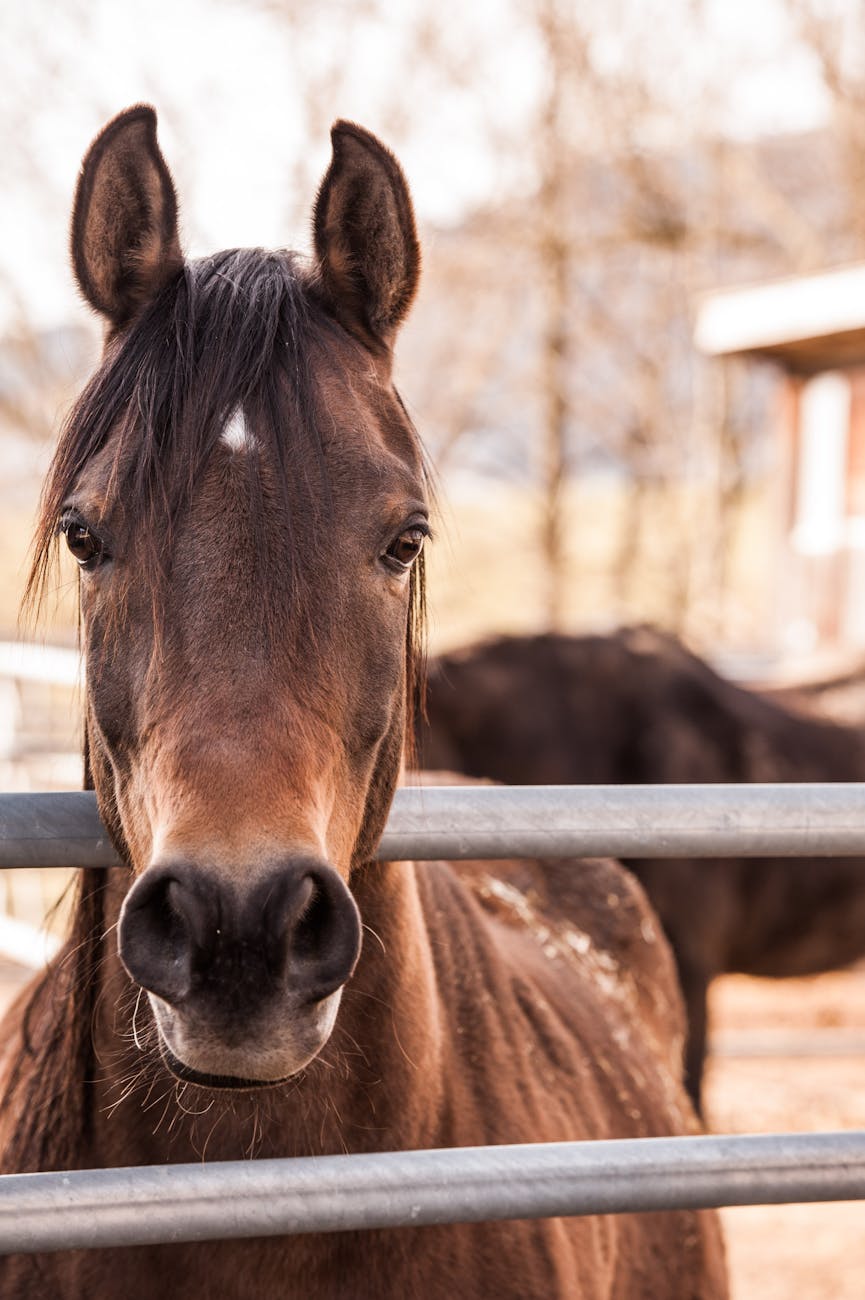
I live with someone that made a living putting horseshoes on horses. His specialty was standardbred racehorses. He had a good reputation for getting horses to run faster and smoother on the track. So, he has explained to me that the important part was that the owner or trainer let him see how the horse moved and stood and ran.  From there he could assess if one leg swung out or if there was a leg that crossed in and bumped another leg.  If the hips were square and just overall what the current situation was.  Then he could start the magic of forming horseshoes that started to correct the issues, tipping feet a certain way, adding weight, having an extra clip.  Lots of things could be tried for a smoother action on the track. This made me think about how important the first step was, he did not form a committee at the barn to talk about what could be adjusted, he did not just start adding a tip and hope for the best, he had to see what was already happening.  Sometimes I think we must spend a little more time just watching, reviewing, and seeing what it is that we are facing.  Seeking to understand why a person is doing things a certain way, checking how we are showing up in a situation, seeing the other side of the track in a situation as it is, not how we want it to be. Then we can begin the work of figuring out one small change that would have an impact in smoothing the situation.  Lifting the side of one practice, changing the weight of one opinion, altering one small habit, and then checking in again to see if the small changes and review have brought us the winners circle we were racing toward.

Boiling Rocks

Ice Rocks” by Joe deSousa/ CC0 1.0

In reading about life in the high arctic I stumbled on a story about the darkness in winter, that in the highest regions of the arctic where people live there is almost four months of darkness.  Decades ago, when there was less technology, I read a story where a woman worked in the dark and cold to chop a block of ice to melt for water.  It was only when she had it in the pot that she realized that it was in fact a chunk of rock that she had worked so hard to bring inside.   That seems like a huge mistake to make and all that effort in the cold wasted, but I must admit I think I have done this many times.  If we think about it, how often do we spend heaps of time on something to find that in the end we are boiling rocks.  Modern teachers talk at length about boundaries and about making sure that we are not nurturing relationships that are not meant for us.  I think, though that most of us still do, we hope that if we keep on giving the other person will suddenly realize our worth.  We sometimes think, well if I take on more of the project this time from others, they will see the value of teamwork and pull harder next time.  Or we think, I will just let myself get over busy and exhausted right now and I am sure it will be smoother next time.  All these scenarios and more could be compared to boiling a rock and hoping for drinking water.  The hope in the dark was to find a nice clean hunk of ice that would offer good drinking water.  The work and effort and weight to carry should have resulted in the desired outcome, the mistake then was not one of process, it was that the ice being chipped at wasn’t ice at all.  And sometimes we will not be able to see our mistake right away, and sometimes we will boil the rock for some time before we realize.  Here is my thought, once we can clearly see it’s a rock, lets stop trying to boil it, start over, make different choices, learn, and set some boundaries that will reaffirm our worth.  Its never too late to turn of the heat and start fresh.

Finding Our Inner Tranquility

Photo by Manuela Adler on Pexels.com

I have a thing about water, which the more astrologically inclined say is because I am a cancer.  I live on a river, I have a pond in my back yard, my favourite happy places are lakes, waterfalls, and beaches.  I love to ramble around our piece of Ontario and be near moving water.  It was remarked to me that Lake Scugog, the closest lake to where I live is open already.  Yes, it is, and I checked it is clear of ice at a new record-breaking early date of March 4 in this year 2024.   The Pigeon River where I live is open and the birds are back already.  It is worrisome that Wiarton Willy was so correct this year and we seem to have an early spring on our hands, however, I do bask in the glory of all the moving open water around me.  When I am overwhelmed, I stand at the bridge and imagine that my troubles are being taken down the river.  This works for a few minutes of mindful meditation.  What is your few minutes?  What works for you to just put down your worries for just a few minutes?  Make sure you find something that can offer you the moments that you need to recenter, all the trouble will be there to pick up again later if you must, but in the few moments you can just be and just breathe and have a little break.  One of my happy places is Burleigh Falls, a small park nearby allows you to have access to climb the rocks and witness the strength of the falls head on.  The water crashes and rolls this time of year.  Find your place or your thing, settle in for that moment, it can help for an eternity.

Everyone Needs a Crossing Guard

Photo by Mathias Reding on Pexels.com

When my daughter started school, we lived on a busy street with her school directly across from our house.  On that first day of school, for reasons unknown to me, my then husband went to a different intersection to cross the road than the one with the crossing guard posted.  After school we both went to pick her up and crossed with the guard who scolded us terribly for what happened in the morning.  She said that crossing with the guard is something our daughter needed to do every single time, that the purpose of the guard is to ensure all students cross safely to school every day.   I have since met many crossing guards doing their work and I have noticed that they help not only students, but everyone cross when they are on duty.   Many times, I have been waiting in my car and noticed adults, seniors, walking groups all graciously accepting the extra safety of the bright vested guard and their stop sign as they cross the street.   Understandably, these walkers will face the next road crossing alone as they keep on walking.   A crossing guard walks back and forth for more than an hour on the hard pavement twice each day to ensure safe crossing, the ensure that the tide of vehicles is held back from the walkers crossing, to offer safe passage to each and every student crossing.  I believe if we think about, we can also come up with examples when something we are doing, learning, focused on, achieving, pursuing and going through could use a guard.  Someone who just meets us in the intersection, in the middle of our efforts and shines a light to keep others back.  Maybe to keep the criticisms back, to hold back the other stressors, to deliver the bologna sandwich.  And those same guards will offer that to all that they see need it.  Look around today to identify your guards, your supporters, your sandwich deliverers.  I know you will find them, doing what they can to help and ready to scold you if you try to cross the street at another place.  These people know that maybe we have to cross the street alone in just another block, but this time, right here, right now, they are here to help, with our without the high visibility vest.

The Balancing Act of Friendships

Photo by Pixabay on Pexels.com

I spent my Saturday with a friend, we do this every year for her birthday, a whole Saturday together to celebrate and we do almost the same things each time.  In fact, Saturday morning my pal texted and said- I will meet you at the usual spot with Chai lattes as tradition would dictate.  We do chat from time to time through the year, we sometimes also have lunch at Christmas time, but overall, this February Saturday is the main event of our friendship and we have done it for 18 years. We get caught up, we exchange gifts (even though my birthday is in July), and we go to the same shops and restaurants.  It makes me reflect that while we all know that connection is just as important as exercise to health and the loneliness is more dangerous than smoking.  All the remedies are hard to define, we all have different needs for social connection, and there is no one size all for relationships. What is meaningful and completely recharging to one person might be too much or not enough to another.  Makes work in supporting people to create connections trickier.  I went to a meeting this week that talked about the kindness of being clear and establishing boundaries.  We need connection and we need a balance where we can do what we need for recharging. We all need other people, but we differ in how much or how long.  The relationship I have with Susan is there, if I needed her help she would be there and I would do the same, otherwise we are a one hit wonder each year and that works for both of us.  Find what works, create connections and traditions.

Patience is a Virtue

Macintosh Computer” by Ian Prince/ CC0 1.0

I had a big issue with my computer this week, so IT guru Angie to the rescue and much to my surprise it was not just a quick fix where I have opened or clicked something I should not have, it was a long drawn out process of diagnostic and then resolution triumph.  In the hours we got talking and Angie described how in the early days of computers as things were loading or downloading there was no spinning wheel or progress bar.  And so those early adopters would get impatient as things were happening behind the scenes on their computer and would shut them off or restart the download and especially back then the system would crash.  So the early creators came up with the idea of the buffering real time animations- the arrows, the spinning wheels, the progress bar, so that one could feel assured that something was happening.  So interesting, and I think of all kinds of situations where something could be happening around us and we would, in general, be so much more patient if we could see the progress bar or at least a spinning wheel indicating that some kind of slow change was unfolding.  So many times when we introduce a new idea, or a new way of doing things we do not see immediate results.  We work to make a change in ourselves and time and again we do not instantly lose the 30 pounds and get frustrated.  How different would it be if we could look at a progress bar?  That our knowledge and experience has increased 34% or our heart health is buffering to the positive after a life change or that our bias is lessening 14%  in our recent work with lived experiences.  We are hard wired for feedback; we respond so well when we can see the instant impact.  Where do we look for our progress bars?  Journaling, reflection, conversation, dialogue, plotting our progress somehow when there can be no instant change to see.   I think if we are on this journey called life, we are changing, downloading something new all the time, we just need to know that the wheels are turning and buffering for a better us, in small percentages at a time. 

We All Have Room To Grow

Photo by Pavel Danilyuk on Pexels.com

I had the opportunity to hear parts of a play about Samuel Stout this week in honour of Black History month.  This man was the first black settler in the Port Perry area in the late 1800’s.  When I first heard about the presentation, I had a wonderful imagining that this was a tremendous story of inclusion in the 19th century so close to my hometown, and for the most part it was.  Samuel was the church organist, band leader and local barber for many years.  He married a Scottish bride and had five children. However, in other ways it was not, he was relegated to only serving white customers in his barber shop, faced many instances of prejudice and did not own property.  Most shocking of all is that history all but forgot him until Theatre on the Ridge did a review of stories about people buried in one cemetery and starts to look at his story from his unmarked grave. The play will be performed in its final state in 2025.  It made me think of all the work we do toward inclusion, roles, diversity, and equity.  How we must force ourselves to look carefully at the gains and the setbacks and keep trying to do better.  Is a person part of a community or are they simply attending.  Am I missed when I am not in attendance or am I just a name on the roster.  I love the theatre, the way it can take a tough history, a great story and weave it into something that leaves us to think a little harder about our role, mindset, and assumptions. We all have assumptions and bias, that can’t be eradicated, but if we keep on acknowledging and listening, we will soon have our minds open to a reflection of whether all customers are allowed in our barber chairs.