Bump It Up!

From the desk of Teresa Jordan, Executive Director – I have had house guests for the last few weeks, including a 16-year-old with whom I recently discussed volleyball. She reminded me of the game, of playing it in high school and of the basics of volleyball communication.

These are not long dialogues to discuss who is going to do what on the floor; the balls whizzes over the net and if you think you have a good angle you yell, “Mine.” That’s all – no pleasantries, no one says, “I would really like to bump this so you can spike it, do you agree?”

In the fast pace of volleyball there is a trust among the team members to do what needs to be done, to listen and watch, to know what should happen next.

Of course, dialogue, debate, conversation and learning are critical in a lot of scenarios – in our work, in life, in family situations. Sometimes, though, I think we must channel our inner teenage high school volleyball player, and call it as we see it. I see this problem coming at us; I am confident in my ability to tackle it; please watch what I do so that you can follow up or help accordingly and have my back. It’s mine.

Some days we are playing a great round of golf or maybe chess, during which there is time to think and to
strategize in our challenges. Other days, however, those problems are being served at us in rapid succession. We need to act quickly, get the problem addressed and, sometimes, drop onto our knees and bump it high in the air knowing others will take the next step and finish the play.

Photo by Pavel Danilyuk on Pexels.com

Talk Big

From the desk of Teresa Jordan, Executive Director – I read a great book – Every Conversation Counts by Riaz Meghji – and I was struck by his story telling and the great reminders about the power of conversation in building relationships and learning for life.

Meghji offers five strategies: Listen without distractions, make big talk, set aside perfection, be assertively empathetic, and make the other person feel famous. What I super-love is that these strategies are for everyday conversation; he offered examples from his world of interviewing people for television.

Two of Meghji’s strategies gave me some pause for thought, the first being about making the most of a conversation by making the “big” talk, beyond pleasantries or chit chat as it were, to ask an impactful question. It takes bravery and a healthy dose of vulnerability to do this. But what if we did go beyond ‘How are you’ or ‘Is it hot enough for you?’ to dip our conversational toes into, ‘What has been the most impactful part of your week?’, ‘What is the most important conversation you have had today?’ or ‘What do you need to talk over with someone today?’

The author’s second suggestion that I love is to make the other person feel famous. With this he stresses holding space for the other person, taking an interest in who they are, and sincerely being grateful for the time and talent they share with you.

In the rush of complex problems and very heavy workloads there is so much richness to be gained in being just a little more purposeful with the conversations that we have. Any conversation can lead to a great connection and something wonderful.

Photo by Andrea Piacquadio on Pexels.com

Back to the Future

From the desk of Teresa Jordan, Executive Director – I have been keeping a journal to help me get through the pressures of pandemic, and I have a list of prompts for when I can’t think of anything to write.  Recently the prompt was: What would your seven-year-old self say about your life as it is now? 

Such an interesting question to really lean into, for sure. I can picture my 7-year-old self, long hair, pig tails, polyester pants, in grade two with Mrs. Hutchinson, sharing a bedroom with her sister, loving the Dukes of Hazzard and dreaming of all the wonders of being an adult. 

I know first off that my younger self would be bitterly disappointed to find that I am not the bus driver that she was hoping to be. She will also be concerned that her dream outfit of long plaid skirts with knee high-heeled boots is no longer in fashion and perhaps most crushingly she will, like me, not understand why dad had to die so young.  

What would she be proud of? What of those childhood wonders that she associated with adulthood am I actually living now?  This is where the prompt gets interesting; think for a moment of what your younger self thought about being adult – no rules, stay up late, eat what you want, drive, have a job.

Ask yourself, for what big things that you were anxious to grow? Then pause and think about all you have truly accomplished, all of the unexpected twists and turns and all the happiness.

The other unintended – or perhaps actually planned by the author – outcome of the prompt was a little reflection on what I thought was important when I was seven, and do I make time for it now? Did I ever imagine in my youth that I would be “too busy” to watch Dukes reruns whenever I wanted? 

I found this a good exercise to just connect with my younger self, really think about her and her dreams. I will admit that this process made me look at the adult I am now just a little differently. I may not have married Tom Wopat as planned, but I made a lot of great choices that my 7-year-old self would have loved, and that makes me appreciate my getting from there to here a little bit more.

Millisecond of Magic

From the desk of Teresa Jordan, Executive Director – I felt like I was on the hot seat in a recent web meeting. I was
being questioned and felt like all the little Brady Bunch screens were focused on me, eyes trained to see my reaction. It was an intense conversation, and I was starting to feel it. And then, in the chat box directed privately to me, I saw this message, “You look great, hair and outfit perfect.”

After seeing this message, like taking a breath of fresh air after being trapped in an elevator, I was able to regroup, almost laugh and get refocused. While this was hard, it was not actually going to result in death or dismemberment.

That comment just shook me out of my reaction and gave me that millisecond to choose my moves. I could just look at the confrontation differently and relax into the dialogue. This was a group of people speaking from their particular experience and knowledge, and even if they actually did believe me to have not handled this correctly, its not actually about me, it’s about the issue at hand.

A few seconds was enough to just ease into what was being said without getting in my CPI defense pose mentally, just listen and choose my next move… after all, my hair apparently looked great.

This is a magic power that we have, a moment in time in any hard conversation or crisis to offer a millisecond of fresh air. Offer a compliment, remind each other to breathe, do something unexpected – then everyone can refocus on the issue at hand and probably solve it better, especially if their outfit is perfect.

Photo by Olya Kobruseva on Pexels.com

Harnessing the Habitual

From the desk of Teresa Jordan, Executive Director – For about a week I drove a rental car and it was pretty fancy. One of the many groovy features of this rental was an alert when I drifted out of my lane, whether over the center line or the white line edge.

What was interesting to me is that in apparently my standard everyday drive to work, I clearly had established a habitual way of driving, because every day I was alerted by the incessant beeping in the same two places. Every day I drifted over the white line on the same two curves. 

Two things are compelling here about this discovery of mine. The first is that, clearly, a loud beeping noise is not enough of a deterrent for me to change my behaviour. And secondly, my 43-kilometer drive to work is so ingrained that I drive in exactly the same manner around turns each and every time. All of this gets me thinking about what else I do in exactly the same way, what other habits I have formed.

Last week I read a great book called “Tiny Habits” by BJ Fogg. He has great suggestions for how to change up your routines [in areas you want to improve] by breaking things down into the tiniest actions and then where you can coupling those new actions with well-worn neural pathways. So, for instance, to get in better shape he challenged himself to do one push-up every time he brushed his teeth. One push-up was tiny but started a new habit that he built on.  

Fogg’s book was a good reminder about how so much of our day is an act of autopilot. The author argues that change is very hard, so start small and be sure to celebrate big when you make a change. I guess the trick here is to make sure that the habit is one you really want to change; I am not really bothered by the lane drift on the turns issue, but I could start working on better health with the pushups challenge. I just need to find the right instant reward, since probably a celebration pie negates the initial goal of the habit process.

Change is hard, but if you just stay in your own lane and make tiny changes that you can sustain, you will get to a positive change of your choosing.

Photo by Kaique Rocha on Pexels.com

Ode to a Special Spoon

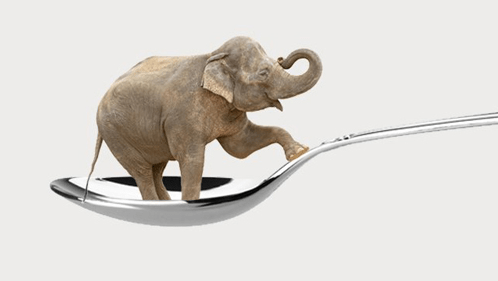
From the desk of Teresa Jordan, Executive Director – I grew up in a large family. Recently one of my siblings reminded me about the elephant spoon. I have no idea where it came from, but of the dozens and dozens of spoons needed in a household our size there was one that had an elephant on the handle. 

In every other regard the elephant spoon was identical to all the other spoons, but as you can imagine its uniqueness made it the coveted spoon. At mealtimes it would be moved, stolen, moved again; occasional fist fights would break out. Sometimes this special spoon would go missing as the result of one sibling or the other hiding it.

There was always a triumph in being the one with the spoon when all was settled for the meal or our parents had told us to knock it off. Without any knowledge of the elephant spoon chronicles, my kids have done something similar at our table for their entire childhood with something we affectionately call “the bamboo knife” (because the handle looks like bamboo).

So, while perhaps limited to my genetic pool, I think there is universal tendency to want what is different or to as a group decide what is the most valuable and then to all want that valuable thing.   

I guess a key to being content and satisfied day-to-day is to appreciate what you have; after all the bamboo knife does not cut differently, the elephant spoon was a little bent out of shape from all the fights over it, and my neighbour’s new BBQ, while shinier, does not sear a steak much differently from my old one.

Camilla Kimball says: “You do not find a happy life, you make it.” I think there is a natural draw to think that having a new car, BBQ, dress or spoon will make us more content and happy, but the trap here is that once the novelty wears off we are looking around for the next new shiny thing that will bring a few moments of joy. 

How much more limitless is the joy when it is in what we already have or the journey we are on right here and now?

All of these battles for the elephant spoon did not actually affect the chocolate milk or pudding or soup that was being eaten; all of the spoons worked equally well, and the food tasted just as good. All this to say that when I am staring down a plate of my favourite food, I am usually content with whatever silverware I have. 

Like what you have, celebrate what others have and urge them to like it, and take more time to enjoy the food, the people and the memories over coveting a prized possession. 

To my siblings I would like to say – I have not seen that spoon in over a decade – which one of you stole it after you moved out?

Confidence Check-in

From the desk of Teresa Jordan, Executive Director – I recently heard Oprah say that almost every guest she had on her show would lean over during the commercial break and ask if their segment was okay, seeking Oprah’s confirmation that they were on track and doing it right.

Now, sure, that makes total sense if I were on the show, having pretty limited exposure to national television, but Oprah interviews a lot of stars, authors, world-renowned speakers and comedians, in addition to everyday people with a story to share. Oprah says, though, that this seeking is the core of the human condition – we want to be seen and heard, and we want to know that we measure up and are all right.

All of this makes me think about all the times that I wonder whether I measure up, whether I am accepted or even liked. What Oprah is saying is that everyone else in the room is wondering the same thing.

So how does knowing this make a difference to how I move through my days and weeks? I guess I will try to be a little gentler with myself and others, a bit more patient with people, and make sure more often that I am behaving in a way that makes people feel that they are important to me.

It is a humbling and confidence-building experience to know that we are all really looking for the same things – appreciation, belonging and a sense that somebody sees us and hears us and likes us, just the way we are.

OK, I am feeling ready for my TV segment, Oprah – I await your call.

Photo by Belle Co on Pexels.com

Yoga Matter

From the desk of Teresa Jordan – When COVID was just a typo when I meant to say “Covert,” I used to go to yoga class twice per week. Yoga time was my time to unwind and, well, do some yoga.

Each week it was pretty much the same small band of amateurs participating, including a woman I will call Nicole. Nicole always arrived 5 minutes after we had begun, blurted an excuse of some calamity that had befallen her, and then plunked down her mat on the floor.

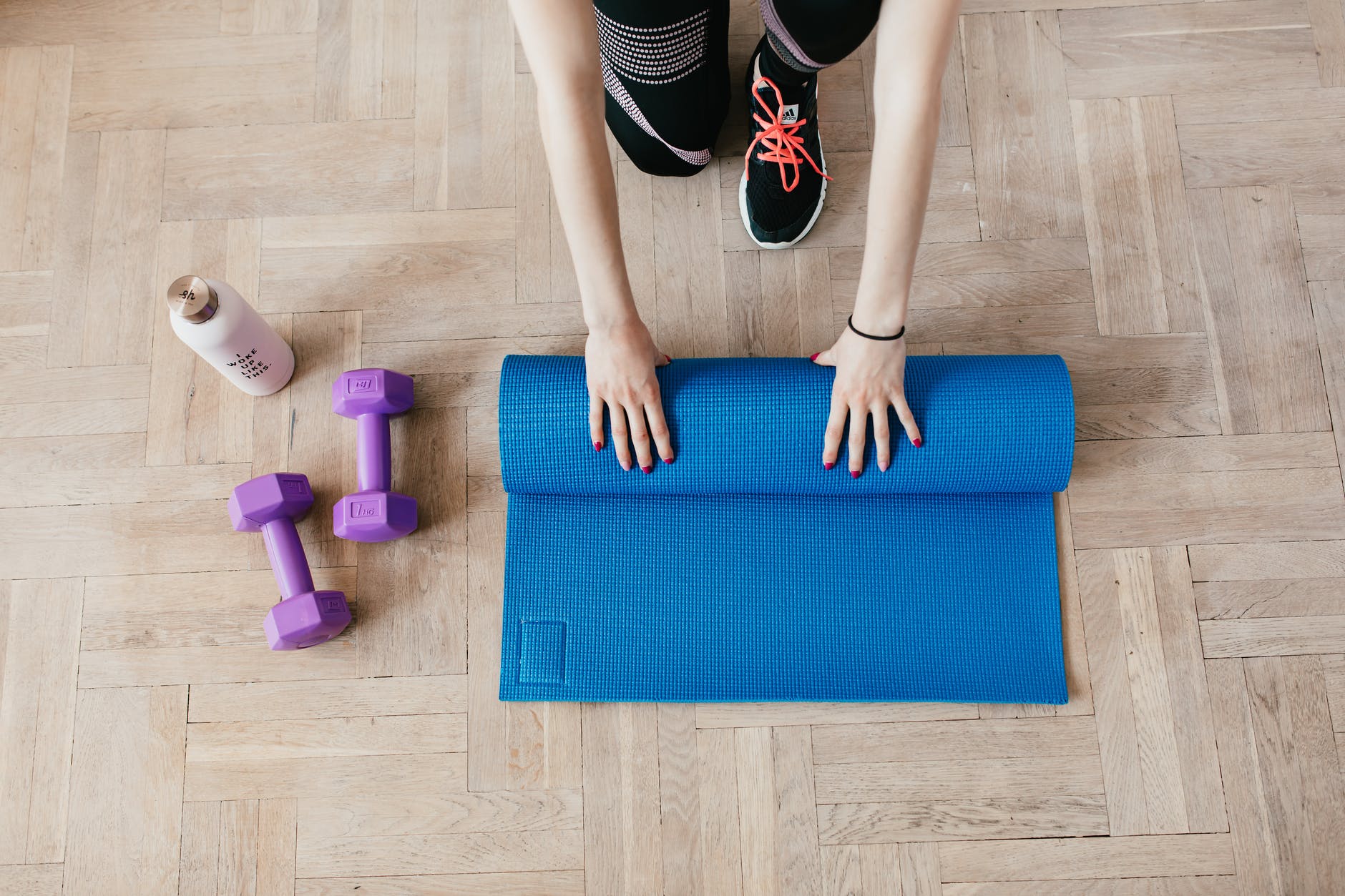
Here’s is the thing about Nicole – she never rolled her mat. It was always a crunched-up mess sprawled on the floor. Now, it takes about 38 seconds to roll up a yoga mat and then the next time you need it, it will roll smoothly onto the floor. And yet, week after week, Nicole had a total disaster, rushed in grumbling while the rest of us were already in the breathing-stretching zone, and plopped that wrinkled mat down with a huge sigh.

I have no theory here, just an observation. We all rolled. At the end of class we would talk and connect and roll our mats… then we’d tuck those well-rolled mats under our arms and carry on.

None of this modelling, example setting, peer pressure moved Nicole to action. In the end, I guess she had to be true to herself – she had her own priorities, and she was clear about what they were. She never missed a class, she was fun when she was there, and it did not seem to bother her one bit that she was not conforming. She was overtly individual and she was clear in her own priorities, needs and patterns.

I can respect that.

Photo by Karolina Grabowska on Pexels.com

Spring Cleanse

From the desk of Teresa Jordan, Executive Director – With springtime in my neighbourhood comes flooding.  The ice in the river stops the melt and rain from properly dispersing and the road and most of my property becomes a lagoon.  The next thing that usually happens is that the daytime warm moves and melts river ice, dispersing some water and then the nighttime freeze up makes a new lower level of ice.  So, all around the river ice is suspended on trees and other objects in layers with no water below it anymore.  Layers of ice floating in air, no longer supported by the flood waters is a somewhat precarious situation.  As you can imagine what happens next is that the ice resting only on its attachment to the trees or shrubs comes crashing down.  The woods are alive with noise and chaos.

All of this reminds me of two things each Spring, the first is that change is messy and never done and the second is that after all that moving water and layers of ice are cleared away the swampy bits can get down to the business of purifying air and water and being home to a million creatures for the sunny summer months. I think for most of us a new idea, a new way of looking at things or a huge decision is also formed in layers. 

At first blush I often feel sure of my next move, then someone or something drains away the water from that plan or attitude and I have to think it all over again, until the first layer crashed down and a new one replaces it.  And after all that new information, and experiences and reinventing, little by little all the mess of my old and new ideas clinging clears away.  Then just like the wetlands, I can go back to doing what I do best or what I try to do well.  That is until some kind of event, article or conversation makes layers crash down all over again. Bring it, the challenge is welcome because on the other side, spring like thinking is waiting. 

Photo by Ruvim Miksanskiy on Pexels.com

Syrupy Sweetness

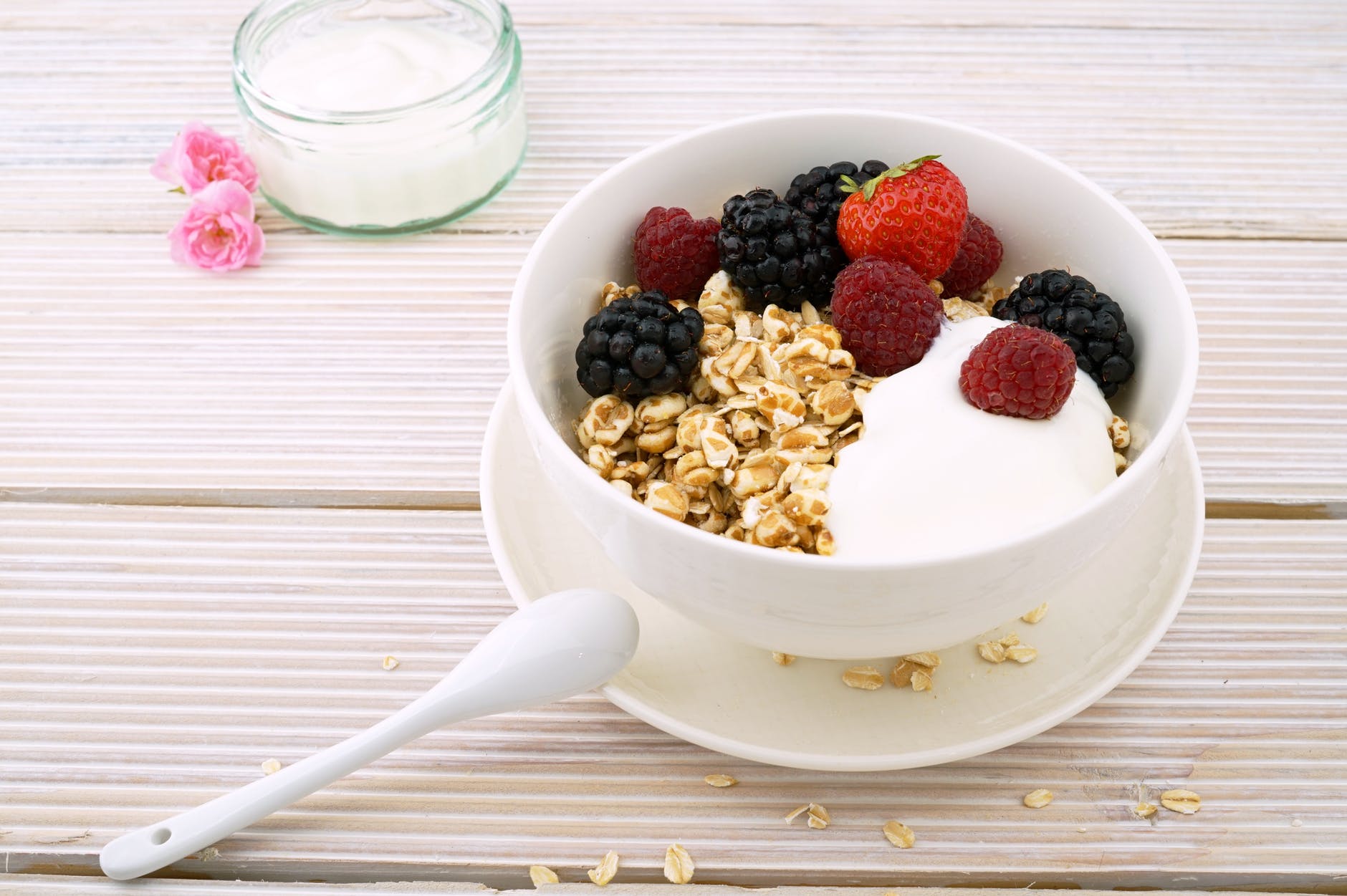
From the desk of Teresa Jordan, Executive Director – I recently decided to make one healthy change, to swap out my usual yogurt cup for plain yogurt and plain berries. This would save tons of sugar.

My husband usually packs my lunch and was on board. Easiest change in the world, as the replacement was just as yummy each day.

It was several weeks before something came up and I had to pack my own lunch. I remarked to my husband that something must have been off because my yogurt and berries was not tasty at all. It was then that he told me – he did not think I would enjoy the new combination and had been adding a bit of maple syrup.

Seems to me this happens often, and we may not even know, that someone around us is adding the maple syrup.Making the shift, the day, the meeting, the interaction sweeter by adding something uniquely wonderful. And how often do we only notice the magic after a person has moved on, or when they are absent? How often do the people around us gauge what we need and adjust? Know that we really cannot face that task and do it for us? See that we are depleted and offer us a joke or compliment?

Take some time to look for the maple syrup that someone is adding to your day – acknowledge it, revel in it, say thank you and then in turn add that liquid gold to someone else’s. There can be no upper limit to this sweet magic for one another to help the sour cherries of the day go down.

Photo by Life Of Pix on Pexels.com