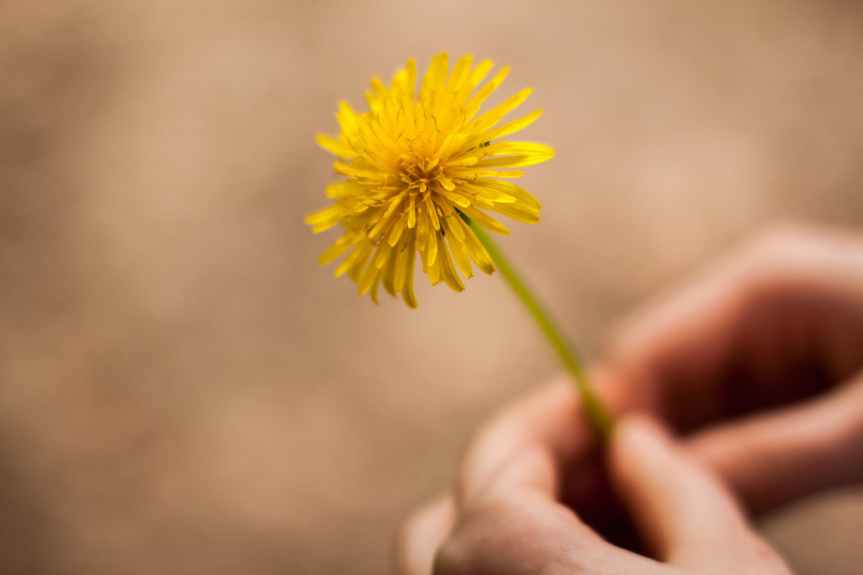
A Dandy Dispensation

woman holding flower
Photo by John-Mark Smith on Pexels.com

From the desk of Teresa Jordan, Executive Director – Another week of pandemic, another week of discovery of all we miss, want to return to and need to think about.

I had to go to the bank machine this week and while I was doing my banking I was next to a father at the brink of exasperation with his young daughter. I am not ashamed to say that I was listening intently. I was amused, while dad was not, with how well this young lady knew her dad, how well she knew what the real limits were and how ready she was to push her father to the limits.

I could hear all of the best phrases of a dad on the edge: “Get back here, stop bothering people, don’t touch anything… and then the infamous, “I am counting to three and if I get to three you are going straight to your room when we get home.”  Of course, dad started counting and like a well-choreographed waltz sequence the girl did not comply until 3 and ¾’s … at which she snapped to attention and complied with the command to stand beside him.

Next I heard her father say, “Get back here right now” to which his daughter responded that she first wanted to “give this beautiful lady a flower.”  I was concentrating on my banking for some of the time and didn’t even notice the little girl’s approach; then from  below my elbow, a flower was presented to me. The joyful symbol of childhood appreciation – a crumpled dandelion-  was now mine.

First let me say that I was so delighted with the compliment of being a “beautiful lady” and second, for the reminder that a dandelion is a flower first, and a weed and a nuisance only to us adults.

So there I was with my envelopes, purse and dandelion. I thought for moment of putting it in my purse, then I re-juggled everything and held the dandelion in my hand.  Getting in my car to leave I heard this same enchanting little rascal exclaim to her dad, “She is still holding it!”

And yes, I am still holding on to the memory of a gift, a compliment and a little joyful gift of good wishes.  I am sure that the father’s version of this story would not include the amount of wonder and appreciation here in mine… but for me, in the middle of a busy work day, with my little flower in my hand, I was reminded that beauty and wonder is in the eye of the beholder.
The Background of our Humanity

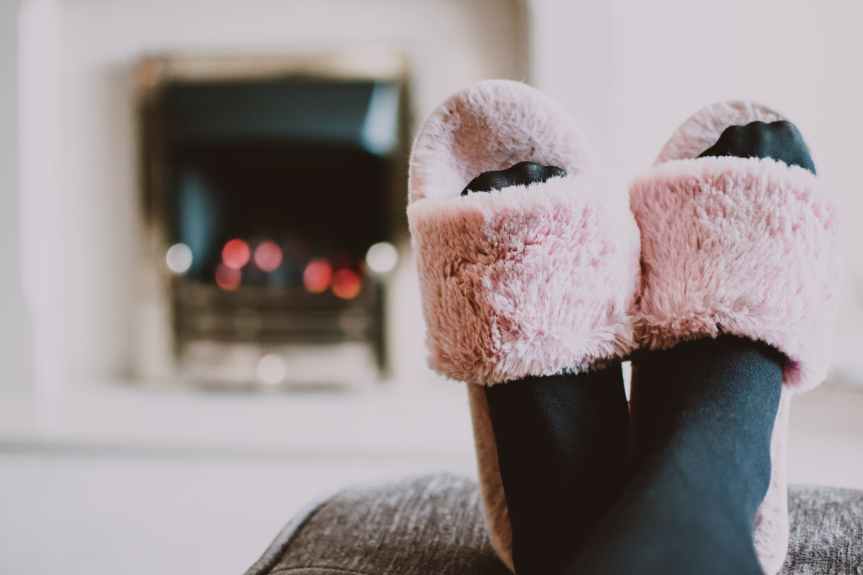
close up photography of person wearing pink house slippers

From the desk of Teresa Jordan, Executive Director – In these challenging times I spend countless hours on video calls with all sorts of collections of people. It is an interesting exercise and a very effective way to meet in these times of social isolation.

I am fascinated by the measures that people go to in order to have a certain back drop, or perhaps privacy, during video calls. I have seen leaders in their child’s bedroom, on their deck, in spare rooms, in dining rooms, in corners of basements.

My favourite video call background is the virtual background – knowing that I am connected to someone in Haliburton in April and seeing the sandy beaches of Jamaica behind them is a little unnerving, but entertaining.

And then there are the inevitable interruptions during video calls – husbands delivering supper, children in states of undress, and another favourite of mine – assorted pets behaving badly.

In a time of separateness how lucky we are to have the technology we have – to be able to meet, collaborate and keep connection while all the time sharing these little extra pieces of our lives both intentional and unintentional.

I once did an interview on the local television station and noticed that the well-dressed host had huge pink fuzzy slippers on. We all hide some things about ourselves from view; we carefully take pictures to show ourselves at our best and maybe even enhance them a little. Yet it is important that we never forget that behind every Australia opera house background we all have dirty dishes, a little pet hair, messy parts of our lives and probably some ugly slippers. This is the stuff of life that none of us puts on the camera, yet in it we can all relate.

Photo by Lisa Fotios on Pexels.com

The Peace of Pie

Pieredux

From the desk of Teresa Jordan ~ “We must have a pie. Stress cannot exist in the presence of a pie.” David Mamet

Dessert plays a pivotal role in my life. Imagine my surprise when I became an adult and found out that this is not the case for everyone!

My grandparents were quite elderly. Being older when they had my dad they were very traditional in farming and household rituals. Dinner was a huge hot meal at noon with dessert; supper was a light meal in the evening with dessert. Then, oh happy day, if I happened to be there at 11 p.m., another lunch – with dessert. 

My other grandparents immigrated from Holland in 1951, so they ate far less pie but savoured plenty of rich Dutch desserts.

So, as you might well imagine, when people say to me, “I’m not that interested in dessert” or “I don’t have much of a sweet tooth,” I feel like they are speaking a foreign language that I just can’t understand.

Dessert to me represents a cozy kitchen with warm wood stove, a link to my grandparents, a way to fix any heartache. So we will set aside how this thinking has affected my relationship with extra weight, and just focus on how this particular lens makes me want to offer others the same comfort – and how ill-equipped I feel when a cookie does not make everything better for someone else. 

I think this is one of the great challenges of “adulting”- I know what I need to make me feel better, resolve conflict, feel appreciated and so I offer a big ole slice of pie to others whenever I can, but it is not always what they need. I have to set aside what I automatically would do based on all of my experiences and really need to take some space to understand what the other person needs to feel better, feel heard, feel noticed. 

I can’t default to a great Boterkoek when the person I want to connect with has never heard of it and really prefers dill pickles in a crisis. I have to set my automatic responses to the situation aside and try to understand what the other person needs. 

And further I have to, as an adult, know that a need for something completely different from what I need, is equally valid and OK. It takes a great deal of effort especially in the heat of the moment to move past relationship autopilot but I know it is so worth it – I know that when I have done it sort of well a relationship was made stronger. I also know that when people with whom I connect take the time to understand what I need in a conflict or crisis, I feel appreciated and heard. 

We are all so unique and everyone has a place at the table – it’s just that mine needs an extra fork for pie.

Some days are like that

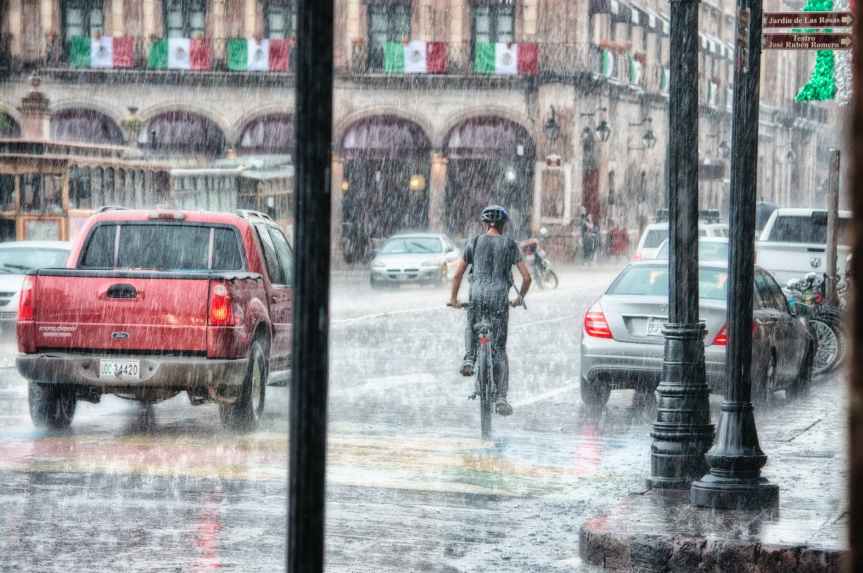
person riding a bicycle during rainy day

From the desk of Teresa Jordan, Executive Director – Some days are hard even in Australia.

One of my favourite bedtime stories with my kids was Alexander and the No Good Horrible Very Bad Day by Judith Viorst. In the book a young man has an exceptionally bad day up to and including lima beans for supper. Perturbed, he threatens to move to Australia. At the end of the book, his mom gently says, “Some days are like that, even in Australia.”

What I love is that at the end there is no glorious resolution, group hug or spontaneous sundae-making party that turns the whole day around. The young man just goes to bed and that is that. I’ve recently felt like reading the story to my kids so they could understand – some days are bad, some are horrible, there are things beyond our control (like lima beans) that do not make us feel good – and there is usually some goal or reality just beyond our reach that looks so much better.

And while we are tempted to say, “Have a cookie” or “look on the bright side,” there is not always a fix or a “turn your frown upside down” option. Sometimes we just have to say, “bad days happen, even in Australia” and tomorrow is a different day.

There is a virus, there are government decisions, there is crisis, there are health challenges, there is a pandemic isolation policy that seems to never end. I know that we all know how to get past bad days, to problem-solve, to be grateful in distress, to rise and find some sparkle.  I guess I am just reminding myself and everyone around me that some days are bad and we just need to put on our pajamas and go to bed; tomorrow could be different – and might have cookies

Photo by Genaro Servín on Pexels.com

.

Regrettable Reverie

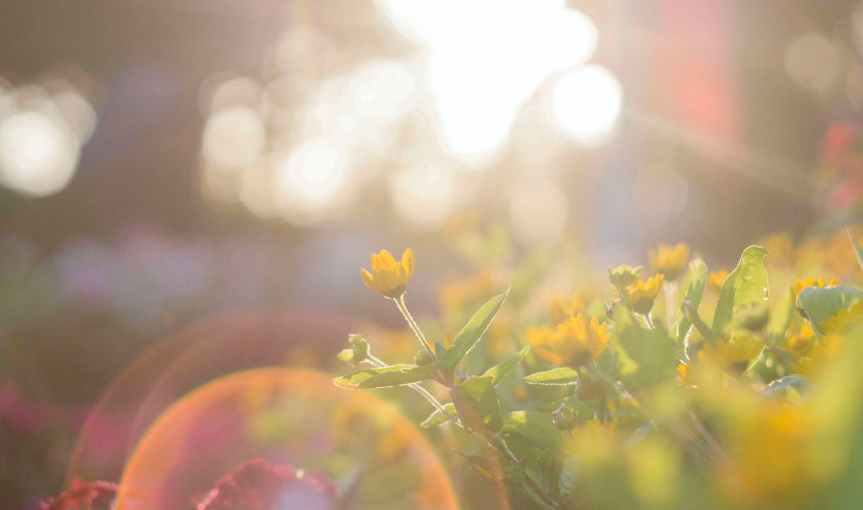
yellow flowers

From the desk of Teresa Jordan – Despite my many decades of practice and experience I did the most unthinkable thing this past weekend. I got a sun burn, and not a little cute one, a raging burning assault on my skin that even now – five days later – is troublesome.

How did this happen, you ask? I was applying sunscreen to my shoulders, arms and neck; however, I did not realize that the top I had on dipped far lower at the back than I was reaching with my protection. Then as the day of gardening progressed, my family started to tell me that I was burning. I did the classic touch assessment to my exposed skin, I sat in the shade and examined, and told my family over and over again that I was fine.

In fact, I was becoming annoyed at their observations because I neither felt burned nor was my skin feel hot to my touch. Why would they not just leave me alone to wrestle with weeds and move plants around?

Anyone who has made this kind of error knows well that a sunburn cannot be gauged through touch at the moment of damage. The burning, super-hot, skin cracking pain sets in slowly over time long after the sun has gone down. Turns out my family was oh so right, and before long I knew that despite the wisdom of my age and experience I had goofed this up.

This experience has made me think of other times that people have tried (and failed) to tell me things about my own self-care – you are spreading yourself too thin, you are too busy, you are not taking care of yourself, that is not the right shade of lipstick for you. All super great and well-intentioned advice; why is it so hard to take, to notice myself, to feel these burns?

I guess like my sun exposure, I was distracted by my tasks. I was not really in distress and I thought I knew best about what condition my skin was in. I guess it is a bit like the frog experiment, you can’t just dunk a frog in boiling water, but you can put a frog in cold water and slowly bring it to a boil. They say that the frog does not really notice until its too late as he acclimatizes to each new temperature as it increases and adjusts, carries on, finds a new normal.

These are extraordinary times; be sure to take a moment to ensure that you are not burning. Sounds easy enough, but believe me in the moment you won’t know it, you won’t believe it, you will be annoyed that it was even suggested and before you know it … frogs legs are on the menu.

Sure, we are all handling things, going without seeing those we love, not going to the movies or restaurants, not spending time away from our homes. In our homes our time is gobbled up with school lessons, cooking and trying to keep boredom, worry and fear at bay.

The temperature is rising and we are adjusting to survive. And what else is there to do? It is a tough reflection because we have to get through this. So maybe it’s just about being kind to ourselves, being kind to those around us, making the ultimate declaration that this is not the time to go for the Better Homes and Gardens yard of the week, but instead to walk softly and rest, to turn off the gas and cherish the small joys in a radically different life.

There appear to be no short cuts here so all we can do is journey through and stay as cool as we can.

Photo by Dua Chuot on Pexels.com

On the Same Wavelength

woman in pink shirt sitting by the table while smiling

From the desk of Teresa Jordan, Executive Director – Saying goodbye to my kids’ grandparents is a well choreographed ritual (outside of pandemic times) – you hug and kiss each person you are departing from one by one and then exit. Then, you pause in the car until the party inside can assemble at the large window or porch door and, if needed, you back up the car or turn on the interior light for the wave.

It had been a long time since I had visited when we dropped off a gift for Mother’s Day.  But the minute we piled back in the car, my instincts took over and I reversed a little for a better view and we waved our hearts out. This is not my only waving ritual – my grandparents always came out on their back stoop to wave, my elderly mother-in-law to her car port, and countless others.

On the one hand is not the hug goodbye, the visit we just had or the saying of goodbye ample effort? On the other, what joy is ours in this little bit of extra goodbye, the little send off during which, just for one more moment, I am holding on to the visit and being sent more love as I go down the street.

Waving is a big thing now that all meetings are done virtually; in almost all cases we not only say goodbye but wave to each other as cameras are clicking off and the meeting is ending.  When I go for a walk on my back road, I wave at every car, because some could be my neighbours and would expect it. Others will be left wondering how I know them, and everyone waves back – so it’s a great entertainment really. What does a wave say?  I see you; I will see you soon; I care; we are all in this together.

Photo by Julia M Cameron on Pexels.com

Trillium Tao

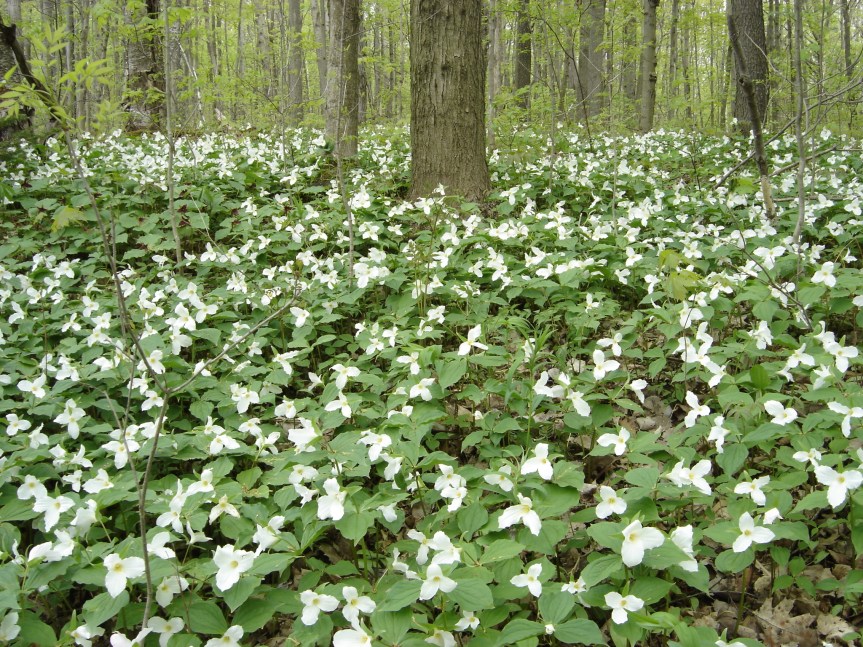
DSC00580From the desk of Teresa Jordan, Executive Director – I am on the hunt for trilliums. The weird thing is that these flowers blanket the woods beside my driveway every year; most of the time they quietly pop out and one morning in May as I leave for work – I notice.

This year is different in so many ways. A friend mentioned the flower last Friday and I went on the hunt. For the first time I really looked on the forest floor and found them in bud.

Now I have checked almost every night to see the progress. Of course the difference here is time, a slowing down of my work, leisure and life in general to give me the chance to even wonder about the trilliums. As I said this is the first time I have even observed them in bud; usually I just happen to notice as a I speed out the driveway or on roads nearby that – oh there are trilliums – and then if feels like a few days later I do the same only its about the leaves turning and it is autumn. 

The difference this year is astounding – walking to the other side of the driveway and down the bank to the forest floor and waiting, watching  and wondering. This year maybe that is the biggest difference – we have time.  I know for sure that in all of the planning and preparing we did over the last decade or so with policies around pandemic I never imagined time to think, time at home, social isolation, closed businesses, closed restaurants.  I never imagined the right next to making sure there was PPE that my very next priority would be making sure there was opportunity for fun and activity to pass the large expanses of time.

This is all to say that while I am not a conspiracy theorist about the world never going back, what I wonder is this – next May will the trilliums just sneak out on me while I drive quickly by or am I a different sojourner in the world now?  Am I forever going to notice more, crave more time at home with family? Am I going to keep some of these distancing habits by choice?

When my husband was a boy, he and his cousin were lost in the woods for 24 hours. When they found their way back to the cabin the only things to eat were a few radishes and stale bread. Now, even after all of the intervening decades, he still enjoys the taste of this weird combination of foods – because after his long fast, it tasted delicious then, and still does – though only to him. 

So, similarly to my husband’s radish delight, will I now be on the watch for trilliums, slowing slow down long enough to take in their blooming? Will I take more time to enjoy what I have missed in the past rush?  I guess none of us have the answers as we experience all of this for the first time – we just have to wait, watch and wonder. There is beautiful life in bud right now; it will bloom as we reenter the world slowly and our experiences will taste delicious for the rest of our lives.

Photo (c) Kristin Duare McKinnon

Changing the Channel

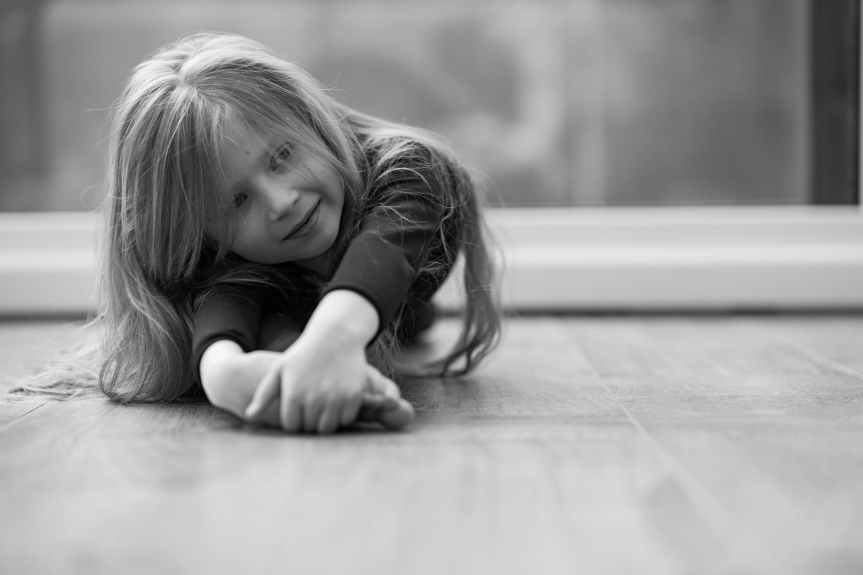
grayscale photo of girl lying on floor

“There were seventy-five people in the lobby and only a seven-year-old girl was finding out what it felt like to sit on the marble floor.” Hugh Prather

From the desk of Teresa Jordan, Executive Director – I miss my huge family and all of the contact that I usually enjoy with my siblings, nieces and nephews. I am so grateful for Face-time, Snap-chat and the videos and photos that fill in this gap.

One of my brothers has three girls under the age of four. It is a busy household and Disney princesses seem to reign supreme. While I cannot visit them, I do get to enjoy a lot of footage of their energy and smiles.

Here’s the thing – the girls are almost never wearing clothes. They are sometimes half dressed, or wearing princess dresses or variations on costumes; but most often these girls are not wearing anything at all. I love this – they are home, they are safe, they are living in their imagination-filled adventures of childhood, and they are together. They are getting into scraps, excitements, games, challenges and worlds of pretend.

And while I am not contemplating wearing only the skirt and crown of a snow white gown any time soon, what I am thinking about is what it feels like to be a little girl with two sisters and no worries, dress codes or stresses pressing into their lives from a pandemic – nor just regular old – life.

How do we channel our inner half-dressed princess, how so we watch a movie not sitting on the couch but singing and acting out the scenes? How do we reacquaint with
this kind of unfettered joy even for a few minutes? I am sure that my three beautiful nieces wonder why I am never in costume or in a state of undress in my chats – that I’m not probably makes no sense to their understanding of the world and all that it offers.

Let’s take any opportunity we have to “Let it go” and live life like a 3-year-old again.

Photo by Gustavo Fring on Pexels.com

Don’t Get Bogged Down

hiking backpack nature trip

From the desk of  Teresa Jordan, Executive Director – Even with working full time I cannot help but have more spare time than usual with the isolation measures in place. I do not visit with family, I can’t see friends, I don’t have any volunteer committee meetings and my church is shuttered. So that leaves me with a lot of extra time.

Last weekend I used a few hours of this extra time to don my rubber boots and walk the acreage that I call home. For the most part this is swamp that goes on for marshy metres with the small end of the Pigeon River meandering through in twists and turns. I have many observations of this journey. Firstly, mud in a swamp that no matter how firm it looks will suck you down to the depths in seconds if you are caught unaware. Secondly, unless you think to bring a compass the twisting and turning involved to get around mud holes and bushes soon has you going in circles. Thirdly, with a river that twists and turns, the perspective of where you are on the property is very easily lost or at least confused.

So that was the adventure, mucking around, looking at how the river bank had changed since the last time we had mucked through the land; seeing the beaver den and their network of highways through the property; and, sadly, seeing the litter left by boaters or carried in with the floods from the road- a stark contrast to the otherwise untamed wilderness.

So that was the adventure and as I finally found a fallen log on which to sit, and looked at the river, I reflected that it was easy to forget the troubles of pandemic when focused on the challenges of swamp hiking. And here is the thing – just like my walk, the challenge at hand is that what is sure and well advised can suddenly change or be found to be incorrect and not at all what they seem. We are all in uncharted territory and trying to find our way, but it is hard to know where to solidly step.

It is easy to lose our way because none of us has the luxury to just be home under a blanket – there is school work to get through with the kids, groceries to procure, our jobs to be done, the extra cleaning because we are home so much more, the extra cooking because the default restaurants are closed-  and all those extra hours to somehow fill with our families. We can easily lose our way.

On my walk I was stunned at how, at different times, the familiar landmarks in the distance seemed to rearrange. This was due to the fact that I was trekking around a curling river bank yet somewhere in my brain I was convinced that the river bank was going in a straight line. It was like a David Copperfield trick to see the place where my house should be – or at least where the TV tower signalled my house should be  – completely disappearing from where my brain thought is should be.

This is how it can feel right now – the sure things, the family rituals, the annual events and rhythms of the work week are all interrupted. Activities that signal the movement of our weeks and years have flitted from view because we are forced to follow where the pandemic and its safety measures are leading us. And unlike my return to home and removal of my muddy boots, we don’t know what the return to normal will look like – we don’t know what pieces of social distancing or heightened disinfecting will linger long into the future.

All we know for sure is that somewhere off in the distance the TV tower is still there, the hugs, gatherings, shared meals, concerts and other important touch points of our years will return, but they just might look a little different. I have not got any of this figured out –  nor am I about to write a book on how to survive a pandemic with style – but I know I was tired and muddy and I probably sat on that log for half an hour; then I was rested and I carried on.

When you are tired and muddy, take a rest. When you are rested – carry on, find another log repeat. We will get to the other side of this, even with all of the twists, turns and mud – we have boots, ans we have each other.

Photo by Valeria Boltneva on Pexels.com

Our Outward Looking Angels

man with wings standing on brown mountain peak

From the desk of Teresa Jordan, Executive Director – When I was the shared Executive Director, I stayed two to five nights in Haliburton every month at the same wonderful Bed and Breakfast. From the parking lot to the entrance you walked past a bay window and in it there were several angels. Here is the memorable thing – even though the owners own living space and sitting room was on the other side of the bay window
the angels all faced outward. They looked out the window at the patrons walking to the entrance of the B&B wing.

I asked the owner once why the angels looked outward … she explained that the angels were not interested in watching one person sit on her couch; their domain was the world and all that  it needed.  I saw something similar on a recent drive to work… Care Bears all lined up in a bay window looking out with a poster that read, “Thank you.” ‘

In this time of social isolation, we are turning inward – spending more time at home, more weekends not going out, more time with family members not leaving the house either. We might be tempted to turn our angels around and focus their gaze on our most beloved inside four walls.

I think though, that we should turn more angels around. Send positive thoughts, send good vibes, send best wishes and gratitude – and spread that stuff around like confetti. Those Care Bears were in fact onto something – they did not band together to form a super ninja fighting bear that beat foes into submission – the old cartoon had
them line up and spread their positive power.

Think positive, send love, use your power of what is joyful to shore up an anxious world. Keep your inner angel facing a world that needs a little love.

Photo by Rakicevic Nenad on Pexels.com