
Kith and Kin

From the desk of Teresa Jordan, Executive Director – I am fascinated with the new recreation of genealogy and DNA. I found out for myself that I am 33% Scottish, which is stupendous because I always pictured myself a Tartan clad heroine of a Diana Gabaldon novel. Descended from Presbyterian Irish people, my DNA tells the story of origins beyond the immigration to Ireland.

A friend I had years ago celebrated his Scottish heritage, went to grad school in Scotland, wore kilts, embraced relations there. However, a quick look into his family tree would make me hazard a guess that he has less Scottish DNA than the Dutch Irish mash up that is my family tree.

So, what does DNA really mean as far as who we are? 

I think that while DNA offers the raw material that was knitted together to make some of my physical attributes, can I really say that I am of Scottish heritage? Isn’t family more about our kin relationships – who we love, who we are closely connected to, parts of our heritage that we know best, that we love?

DNA is delightful though somewhat questionable hobby for people interested in genealogy, but it is our whole lives that define who we are.  After all its not coded in my DNA that I love Elvis or seem to know the words to about 800 Christmas songs; these are the attributes I gathered living this life with the people who I call family with shared DNA or not. 

So that is the answer – my former friend might only be about 12.7% or so Scottish, but that is who he is – his kin relationship, his heritage – because that is where his bagpipe-loving heart belongs.  Find your heart and hearth and embrace who you are, who you call kin and where you belong.

Photo by Gene Taylor on Pexels.com

Hard to Swallow

From the desk of Teresa Jordan – I think most people understand that my husband is retired and, since he has the time, is the chief cook in our household. It has come to my attention over the years that one small issue [that I will never complain to him about] is that he does not prepare food that he does not like for me even if I like it a lot. I am not even sure if this a conscious decision; I just know that over time I have learned to not purchase certain food items.

One to the prominent examples of this is spiced Gouda cheese with caraway seeds. In my childhood, this was called cheese, as it was the only kind of cheese that we had regularly for our sandwiches. My husband thinks our family ‘cheese’ is revolting and, as the person who makes almost all of my lunches and snacks, that block of Gouda would mould to something unrecognizable, so I no longer buy it.

How often do we unconsciously do this this type of thing to others? We know what we like and what we are comfortable with, so we are somewhat set to autopilot regarding the golden rule and how we treat others. However, if I am someone who needs to talk through my problems and you are someone who needs quiet contemplation when the going gets rough, we might have to make a cheese sandwich we do not particularly want to eat in order to problem-solve together.

We sometimes must think about the other person – what they need, how they communicate and with what approach they are comfortable. It is hard to step out of our comfort zone, try to meet the person where they are at and face those caraway seeds. And while this is a lot of work, especially in a crisis, it is critical to making most of the relationship – to get to where we need to be in the project, endeavour, or solution. It’s hard work because a lot of people process communicate in a vastly different way that you do, but its worth figuring out how best to make the sandwich.

Photo by Cup of Couple on Pexels.com

Weathering the Storms

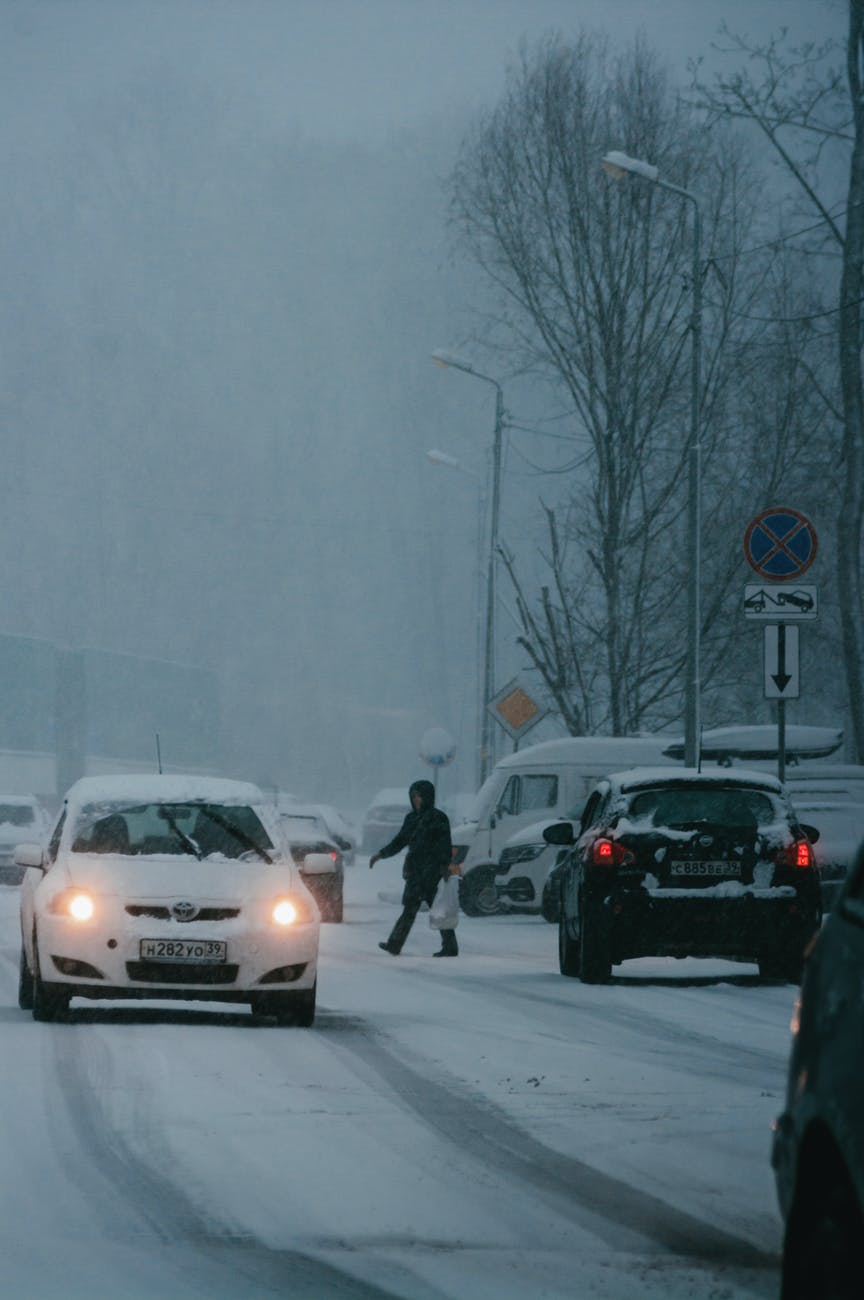
From the desk of Teresa Jordan, Executive Director – Sunday was a snowy day. I was so lucky as no one in my household had to go anywhere, so we all stayed home in the storm.

We live beside an intersection on the highway, and at about 5 pm on Sunday there was a major accident involving four cars at the corner. As a result, the traffic was rerouted to the back road behind our property.

This is a problem – I never take that road from November to March because it is never plowed well and has a humongous hill. As expected, by the time the accident was cleared there were seven cars in the ditch and both the fire truck and snow plow were stuck on the side road.

All of these traffic woes happened around me while I was watching Hallmark movies under a blanket – making me think about that timeless truth that there are battles going on all around us that we often know nothing about.

We are all doing what we need to, but often we can get rerouted – by illness, accident, family crisis or job changes. We suddenly must veer from our familiar path, and the detour can be treacherous. I guess while we focus on our own lanes, there needs to be at least an acknowledgement that others can easily be trapped on the snowy hills, quietly going through great challenge. We can’t know what is going on at all times, we can only be kind, aware and ready to share our blankets as needed.

Photo by Dmitriy_mir on Pexels.com

Wuthering Heights

Photo by Street Donkey on Pexels.com

From the desk of Teresa Jordan, Executive Director – I left work with a little snow falling, and whizzed along my well-known path to home humming along with the music I was playing.  I did notice the snow increasing; however, it was still good driving. 

After I passed through the village of Bethany I encountered heavier snow, and then found myself completely stopped in a long line of brake lights weaving through the rolling hills ahead of me.  I was still completely content, however, and after a few minutes decided to call home to let them know I would be later than planned. 

The snow increased and the road became covered in icy slush; he traffic crawled slowly toward me from the west, and I started to see other cars turning around in our line-up and heading back.  It appeared that large trucks were stuck in the hills.

After 35 minutes parked on the highway, I reluctantly made the decision to also turn around.  Doing so was frightening, as the road was slippery and I had to do a three-point turn on a hill from which I could not see oncoming traffic. 

I got turned around and, in consultation with my husband, picked a different somewhat hill-free route home.  I moved slowly along the new, slippery and slushy route, and as I approached the only hill on the route traffic was again stopped behind a transport stuck at the crest of the hill.  Having to turn around again, I felt hopelessly stranded 7 kilometers from home with no way to get there. 

I drove back to the east of the village to a third route home. Once I returned east, I was surprised by completely different weather – the snow was only light with no slush or build up.  I carefully drove the hilly back roads to home.  

What this not-so-great introduction to this season’s winter driving made me think about was that sometimes the way forward is to turn around, backtrack a little to get your bearings, and then you find new a way to make it to your destination. Stay calm, there is always a way through.

It’s the decision to stop and turn around that is the hardest, and even it does not always turn out right, steady on with the long-game goal as guide no matter the route or hills you encounter.

Out of this World

Photo by Brett Jordan on Pexels.com

From the desk of Teresa Jordan, Executive Director – I love to read, and I often seek out different kinds of material so that I am not stuck in one echo chamber of interests and ideas. To that end, my son offered me a book about Elon Musk and SpaceX’s beginnings.

While my son is an engineering student who loves this stuff, I must admit I was a little lost in all the specifics of how the Falcon 1 was developed, designed, and launched. What did stand out to me was that the first three attempts to launch the Falcon were absolute disasters; the sum of thousands of hours, more than a dozen employees and millions of dollars seemed to lead to a total flop, times three .

The book’s author stressed that the SpaceX philosophy for development was not linear but iterative in its design – meaning that instead of adjusting over and over again trying to formulate the perfect plan, designers were encouraged to come up with an idea and try it.

This philosophy resulted not only in the three big failures to launch but also in literally hundreds more washouts in the warehouse, workshops and launch pad area. So rather than trying to figure out where things might not work, the engineers here got to see firsthand their flaws in the mistakes that piled up. With each fail they then went back, adjusted, used the learning. The rest of the SpaceX story is clear- they achieved their goal of orbit.

The takeaway? While not always possible, sometimes you just need to get the first pancake out there, see how that process worked, what that connection achieved, how that project turned out and then adjust the recipe, and start again – only this time with more knowledge and one step closer to perfection.

Photo by Brett Jordan on Pexels.com

Remembrance Day

Photo by Miray Bostancu0131 on Pexels.com

From the desk of Teresa Jordan, Executive Director – Remembrance Day is a powerful reminder of the human spirit in times when our country was at war on a global level. Young men and women volunteered to serve with almost no idea what they would be truly up against.

A few years ago, I got to spend time with a group of War Brides. What they told me about their experiences in England during the war was so real and vivid that it left a lasting impression.

One war bride, well into her eighties, told me that she was walking with her baby in a pram and the German fighter plane came so low and close that she made eye contact with the pilot before diving with her child into the grassy ditch beside the lane.

The group talked of bomb shelters and lost brothers, of the constant fear and the great shortages of food and other comforts.

On the other hand, these were all war brides, so clearly each had found love in the same time. Some, in an amazingly short time, had decided that they would spend their life with a soldier, and faced moving to a completely different country in the midst of the chaos of war and disaster.

“So, I love you because the entire universe conspired to help me find you.”

Paulo Coelho, The alchemist

Each of us has faced great challenges of our own – happily not usually the threat of bombs and warfare here in Canada – but we’ve faced disasters of different kinds.

I think what these spunky ladies taught me, over 75 years after the war and their great migration, is that there can be joy in the midst of great sorrow, there can be a sense of adventure when all seems lost, and that Canadian soldiers are clearly irresistible. 🙂

It is important to remember, and to reflect on great sacrifice, youthful exuberance and the idea that there can still be joy… even during the worst circumstances.

Photo by Miray Bostancu0131 on Pexels.com

Believing is Seeing

From the desk of Teresa Jordan, Executive Director – I spent my Halloween night with a bunch of kids, and in chatting with the six and under crowd about the night my niece Mary shared her thoughts: “This was the best night ever!” 

The best night ever? When is the last time any of us declared that? When was the last time you even thought about perhaps ranking your day in the top 25 of good days so far?

The thing is Mary did not overthink it. She did not analyse that perhaps it was a little dark, cold, perhaps she felt a little tired or that her cousin was bugging her. She just noticed the candy, the company, the decorations, all of the fun and decided best night ever.

Here is my challenge to you: have a best night ever, figure out how to go on a rampage for joy and do it, then do not try to analyze whether it was completely what you had hoped. Have a good time and then declare loudly – best time ever.

There is plenty of research out there that suggests that we find exactly that for which we are looking. If we are looking for awesome we will find it; if we decide that we are going to have the best night ever and hold that thought, chances are, we will have a good time.

All that we can control in our days and nights is our thoughts about them. I am not saying that we don’t have challenging, hard days. I think, though, that even those are a little easier when we stay on the lookout and at the ready to jubilantly embrace and announce the best time ever!

Photo by Rudolf Kirchner on Pexels.com

#morealikethandifferent

Photo by Keegan Houser on Pexels.com

From the desk of Teresa Jordan – I recently did some training that began with a mindfulness exercise; the exercise is called the just like me practice, which is well known and comes up countless times in an internet search. The exercise was impactful because it began with holding in my mind someone that I did not particularly like, and then had me work through dozens of statements like, “This person has been disappointed in life, just like me.” 

I know that mindfulness is not for everyone, a little bit of imagination, deep breathing, noticing and discipline to go deep sometimes. But the just like me exercise really did make me think. I held the face of the person in my mind’s eye and then I really did realize that, just like me, they had been sad, felt inadequate, been frightened, longed for friendship, were still learning about life, wished to be free from pain, wished to be happy… and will die. 

Several times at conferences or meetings I have had to talk or work with a new colleague and inevitably we find common ground, shared interests, shared passions. As humans we are all unique and have our own gifts to share, but in many ways, we are so very much the same. We are born, we live, we try the best with the tools we have, and we finish our time on the earth. 

Brene Brown says, “ I know my life is better when I work from the assumption that everyone is doing the best they can.”  Everyone we meet is trying to live a good life, turn away from pain and trauma, find a little joy. Everyone we meet has faced great challenge and great triumph. It’s not that I think we will all instantly love all other humans after we do this meditation exercise; however, the journey may be a little easier when we are hurt, angry, annoyed, or bothered to remember that we are all trying to make the best of it.  Everyone is seeking some answers, trying to figure it out, trying to be well and do good, just like me and you.

Photo by Keegan Houser on Pexels.com

The Truth will out

From the desk of Teresa Jordan – I love Harry Potter, the books especially. There is a line in The Order of the Phoenix – Mr. Weasley tells Harry – “As the muggles say, truth will out.”

This is a quote that has guided my sojourn countless times, even back when it was just from Shakespeare. To me it means that I have to walk in my truth and, while I might fall or misrepresent myself, I cannot own the bad opinion or judgement of another.  I can look that judgement over, decide whether I want to use any new material to improve myself, and then I must set it down. 

I know that I want to defend myself, talk it all out, force what I know to be true about myself to be considered. However, we sometimes get caught in situations where we said or did something that triggered a nasty response in someone, an aggressive hand gesture on the highway, a snarling reproach from a stranger at the store or, perhaps most horrible, a cruel attack by someone to whom we are close. The truth will out. When there can be no further conversation, no dialogue or mediation, when you must carry on without opportunity to defend or clarify or state intent that somehow got misinterpreted or was misdelivered, there is no amount of worry, anger, venting or practicing what you could have said that will heal the wound. 

You know who you are, what you were feeling, how you think, how you usually drive, or that you usually the follow arrows on the floor. The whole rest of your life will bear out the real you; the truth will out.  Sometimes we just need to set down, send out positive vibes and continue the journey that will keep on bearing out the real you, your truth.

Photo by Ivan Oboleninov on Pexels.com

To Be or not To Be

From the desk of Teresa Jordan, Executive Director – I had the privilege of taking some time out for training this past week.  Nouman Ashraf, a professor and outrageous-in-all-the-right-ways human being, led a session that hinged on translating identity into capacity each and every day. 

Getting to know where you have been – your own story and your own blind spots – and then translating all of that into the contribution only you can make was Ashraf’s focus. 

The professor challenged that we all need to meet people exactly where we find them in our daily interactions; however, our aim is not to leave them there. Bring about a moment of inspiration, a moment to hold a cause, a space in time where the interaction is the only pressing matter. 

We all have some form of a to do list that we reference to keep us on track for our millions of tasks. Ashraf suggests a daily “to be” list. A “to be” list is how we show up, how we decide to navigate the world with intention. Today I choose to have impact, today I will be more empathetic, today I will be present, today I will actively listen or maybe even single task for a period of time. 

Ashraf turns the steps in the river chestnut on its head; we cannot step into the same river twice because the river is always changing and moving. However, we are also always changing, so we are different people as well every time that we step into the water. 

Everyone loses if we do not intentionally show up exactly as we are, one interaction at a time, bringing our unique brand of outrageous to each interaction, deciding how to be and aspiring to leave people in a place different, and better, than where we found them. Outrageous.

Photo by Kobe – on Pexels.com